
What Is The Estate Whisperer?
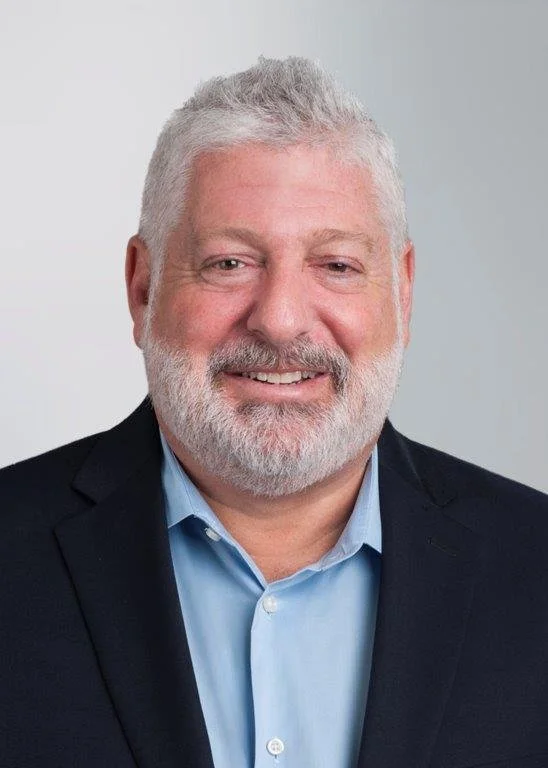
The Estate Whisperer is a consulting firm that provides assistance to high-net worth individuals in the context of their estate plans, the post-death administration of wills and trusts, resolution of disputes between beneficiaries and trustees, and charitable planning. The firm’s principal is Andrew M. Katzenstein (“Andy”).
Andy began his career at Loeb & Loeb, and was a partner at Bryan Cave, Manatt Phelps Phillips, Katten Muchin and Proskauer Rose. He practiced law from 1982 - 2025.
Andy has been an adjunct professor at UCLA School of Law, USC Law School, University of San Diego School of Law, and Golden Gate University. He currently teaches in the LL.M program at UC Irvine School of Law.
If you’d like to learn more about Andy’s experience and background click here.
Though he no longer practices law, he makes his knowledge and experience available through The Estate Whisperer to help people understand the estate plans they are putting in place and to help them address difficult and complex problems that their other advisors may not be able to solve.
Consulting Services
Understanding complex estate planning issues
-
Estate planning is a complex subject, which often raises questions that are difficult to answer. The Estate Whisperer can provide Andy’s years of experience to people struggling with these issues to help them reach conclusions that allow them to complete their estate plans.
Some of the complex issues that arise in this context include:
The estate, gift and generation-skipping tax law that applies is not easy to understand.
How assets pass at death involves making sometimes difficult decisions about family and friends.
Who one picks to administer those assets at death may not always be obvious.
Whether assets should be distributed outright or remain in trust must be considered.
Who should act as guardian for a minor child can cause difficult discussions between spouses.
Which family members or friends should be granted the authority to make health care decisions can be difficult to determine.
When one child works in the family business and one does not, it can be complex to plan so that the child in the business is fairly compensated but the child outside the business receives appropriate distributions from business operations.
Determining how to work charity into the charitable plan presents many options which can be hard to pick from.
Making decisions that will help to eliminate arguments after death, either over money or control, can be hard to identify.
Avoiding probate (through the use of living trusts or other vehicles) must be addressed.
Coordinating the disposition of assets by beneficiary designation (e.g., life insurance, IRAs or retirement plans) or by means of title vesting (e.g., joint tenancy, pay on death) with the rest of an estate plan must be undertaken with careful awareness of tax impact and dispositive effect.
Figuring out where life insurance might fit into an estate plan is not always apparent.
-
How to address these complex issues really requires the input of professionals with significant experience and expertise. The answers oftentimes cannot be found in articles or books – only having dealt with these questions over time can the most helpful solutions be arrived at.
Andy worked with clients to address these questions for the 43 years he practiced as an estate planning attorney. He had the opportunity to work with many prominent families with assets in the $100 million - $4 billion range. Clients included those with significant real estate assets, entertainers (in film, music, and theater), and owners of operating businesses (such as owners or operators of grocery stores, jewelry businesses, tech companies, medical companies, logistics companies, publishing companies, and manufacturing companies). He’s helped plan for the disposition of valuable car, art, photography, wine and jewelry collections, boats and planes, horses, and other valuable assets.
While practicing law, Andy represented clients against the IRS in gift and estate tax audits. He served as litigation counsel to both challenge and defend estate plans. He represented beneficiaries who brought suits against trustees and defended trustees who were sued by their beneficiaries.
In sum, Andy has seen it all. And he can bring that wealth of knowledge and experience to individuals to help them (along with their attorneys) work through the complex issues described above.
-
Some solutions require “thinking outside the box”. The Estate Whisperer can make Andy available to suggest creative, outside-the -box solutions to hard-to-solve problems.
Difficult problems often cannot be solved with simple solutions. Outside-the-box solutions may often need to be developed to resolve those difficult problems.
-
In order to be able to think outside the box, first one must know the box. With an in-depth knowledge of the challenges that can be brought against different strategies, a solution that avoids those challenges can be ascertained.
Andy’s 43 years of law practice, coupled with his teaching experience in law schools and lectures, has given him an intimate understanding of the box. As a result, he is uniquely situated to think outside the box to help design creative solutions to difficult problems.
Andy’s creative abilities are confirmed by Chambers Review. Chambers Review is the most respected publication that ranks attorneys in the United States. In preparing its rankings, Chambers reaches out to clients to learn how they view their attorneys. For 10 years prior to Andy’s retirement, Chambers ranked Andy in Band 1 in Southern California. For 3 years prior to Andy’s retirement, Chambers ranked Andy in Band 1 in the Western Region and Nationwide.
Chambers provided the following quotes regarding Andy’s abilities in its 2025 rankings:
“Andrew Katzenstein is one of the best attorneys in his sector. He always gives solutions to complex issues.”
Andy is a terrific lawyer. He is very creative and he works well with other client advisers.”In earlier Chambers rankings, the following quote came from a client:
"He's extraordinarily knowledgeable and creative.”
The Estate Whisperer can make Andy available to fashion creative solutions to client issues in the estate planning arena. When others cannot solve a problem, it makes sense to contact The Estate Whisperer for a consultation.
Finding outside-the-box solutions to difficult estate planning questions
Choosing amongst charitable giving options
-
There are many options when considering making gifts to charity. The Estate Whisperer can help people evaluate those options so that they can accomplish their charitable desires in the most effective way.
Giving money to charity involves many sophisticated issues that not everyone is aware of. For example:
Gifts can be made directly to charities, or to a donor advised fund, or to a private foundation. Different tax considerations apply in each circumstance, and the donor has different amounts of control over the gift depending on where it is made.
If a donor wants to make a major gift to a charity, there are many different “naming opportunities” that are available. The donor needs to negotiate with the donee charity to determine what that opportunity is, how much it costs, over what period of time should contributions be made to secure the naming opportunity, and how can the donor be sure that the building his or her name appears on is upkept to the highest standards. Charities have teams of attorneys that negotiate these points all the time. Donors need proper advice in this negotiation process as well.
If a family foundation is to be established, the issue will arise as to which family members will operate the foundation. When the first-generation donors are living, they likely want to keep control but involve their children and grandchildren – how to arrange that control is sometimes complex. When the first-generation donors die, the persons that run the foundation must again be determined. Should it be the oldest child? All the children together? Majority or unanimous rule? And if a child is deceased, should one of his or her adult children get to take that deceased child’s place? Addressing these control issues when a family foundation is created can avoid problems in the future.
After parents die, should all the children work together as part of one foundation? Or does it keep family harmony by having the foundation split into separate foundations when the parents pass? These are questions which, if addressed properly, can avoid friction between family members in the future.
Gifts to charity can also be made through charitable lead trusts or charitable remainder trusts. And those trusts can be either “annuity trusts” or “unitrusts”. Determining when these different options are helpful and which to pursue is a question that takes an expert to help families sort through.
-
When acting as an attorney, Andy helped form over 75 family foundations. He’s advised private foundations with hundreds of millions of dollars to give away. He’s helped structure those foundations to streamline control, lock-in the charitable desires of the family members who made the gifts and accomplish those charitable desires without the managers or the foundations being subject to IRS penalty taxes. The Estate Whisperer can make Andy available to consult to help with these matters.
When practicing law, Andy negotiated more than ten “naming opportunity” gifts that exceeded $50 million to a number of colleges, hospitals, and other public charities. Through The Estate Whisperer, Andy can provide guidance on how pledge agreements for these significant gifts should be structured to best protect and honor the donor’s wishes
Translating what your estate planning attorney suggests into plain English
-
Estate planning concepts can be difficult to understand when meeting with an attorney. The Estate Whisperer can make Andy available to interpret for individuals what estate planning attorneys recommend, so that decisions can be made that allow those individuals to complete their estate plans.
When clients meet with their estate planning attorneys, many times they find it difficult to understand what their attorneys have explained to them. They often wish for a “plain English” explanation of those complex discussions so that they are better situated to make important decisions.
-
The best way to learn how to speak in “plain English” is to teach courses. Students are bright individuals with no knowledge of what they are learning in a class. To help them digest the subject matter, explanations must be understandable.
Over the past 35 years, Andy taught estate planning courses at UCLA Law School, USC School of Law, UC Irvine Law School, Golden Gate University, University of San Diego. He’s also lectured around the country on various estate planning topics, at places like the USC Tax Institute, the Hawaii Tax Institute, the ENGAGE Conference for Accountants in Las Vegas, and the State Bar of California’s Estate and Gift Tax Conference.
These experiences give Andy a unique ability to explain difficult concepts in “plain English”. Through The Estate Whisperer, Andy can accompany clients to their estate planning meetings with their attorneys in order to help them understand what their lawyer is suggesting to them.
Avoiding litigation with family members and fiduciaries
-
Families often find themselves in conflict over the management or distribution of assets when someone passes. Prior to initiating litigation to resolve those conflicts, they might instead reach out to The Estate Whisperer to seek a solution that avoids litigation.
When people die and their assets are disposed of in accordance with their wills or trusts, disputes can arise. For example:
The valuation of assets to be divided on a non-pro rata basis between heirs can be contentious. For example, it’s easy to value a stock or bond, but how does one value a minority interest in a real estate partnership for this purpose? Agreement must be reached before distribution is made.
The choice of assets that each heir is to receive must be determined. For example, if the decedent owned 4 apartment buildings, should the 2 children co-own each 50/50? Or should separate buildings be allocated to each child? If separate buildings should be allocated, what happens if the values are not the same?
Though the will or trust may have nominated persons to act as trustees of trusts, there are times when the combination of persons nominated by the decedent could result in people acting together that are unable to work cooperatively. How can the nomination of trustees be re-shuffled to avoid controversy?
Disputes can arise over how much the trustee paid him or herself as a trustee’s fee.
-
The Estate Whisperer can provide Andy’s many years of experience to help find creative solutions to resolve disputes before a lawsuit is filed. Avoiding litigation saves time and money for the family but also gives the family the best opportunity to remain part of each other’s lives in a loving and friendly way.
Fees
Monthly Retainer
Where the work will be ongoing, a monthly retainer arrangement is preferred. The amount of that retainer will be negotiated before the consulting arrangement will commence. With 30 days’ notice either party can end the arrangement.
Project-Based
If there is a specific project that The Estate Whisperer will consult with the client to help the client complete, a one-time project fee can be negotiated.
Hourly Rate
The Estate Whisperer can provide consulting services on an hourly basis. The hourly fee is $750/hour.
The Estate Whisperer Is Not Your Attorney
The Estate Whisperer provides consulting – not legal – services. You will need to inform The Estate Whisperer of your attorney’s name before a consulting agreement can be signed, and that attorney’s name will be reflected in the consulting agreement.
The arrangement contemplates that your attorney will attend all meetings and be part of all other communications between you and The Estate Whisperer. Your attorney will receive emails from The Estate Whisperer summarizing consulting suggestions that have been communicated in any setting where your attorney did not participate.
The Estate Whisperer will provide consulting services but will not draft documents for you. Nor will The Estate Whisperer represent you before any court. The Estate Whisperer will make suggestions to you, but it is up to you and your attorney to make final decisions regarding all matters for which you have engaged The Estate Whisperer to provide consulting services.